Blogs
Export Quality Rice vs Local Market Rice – What’s the Difference?

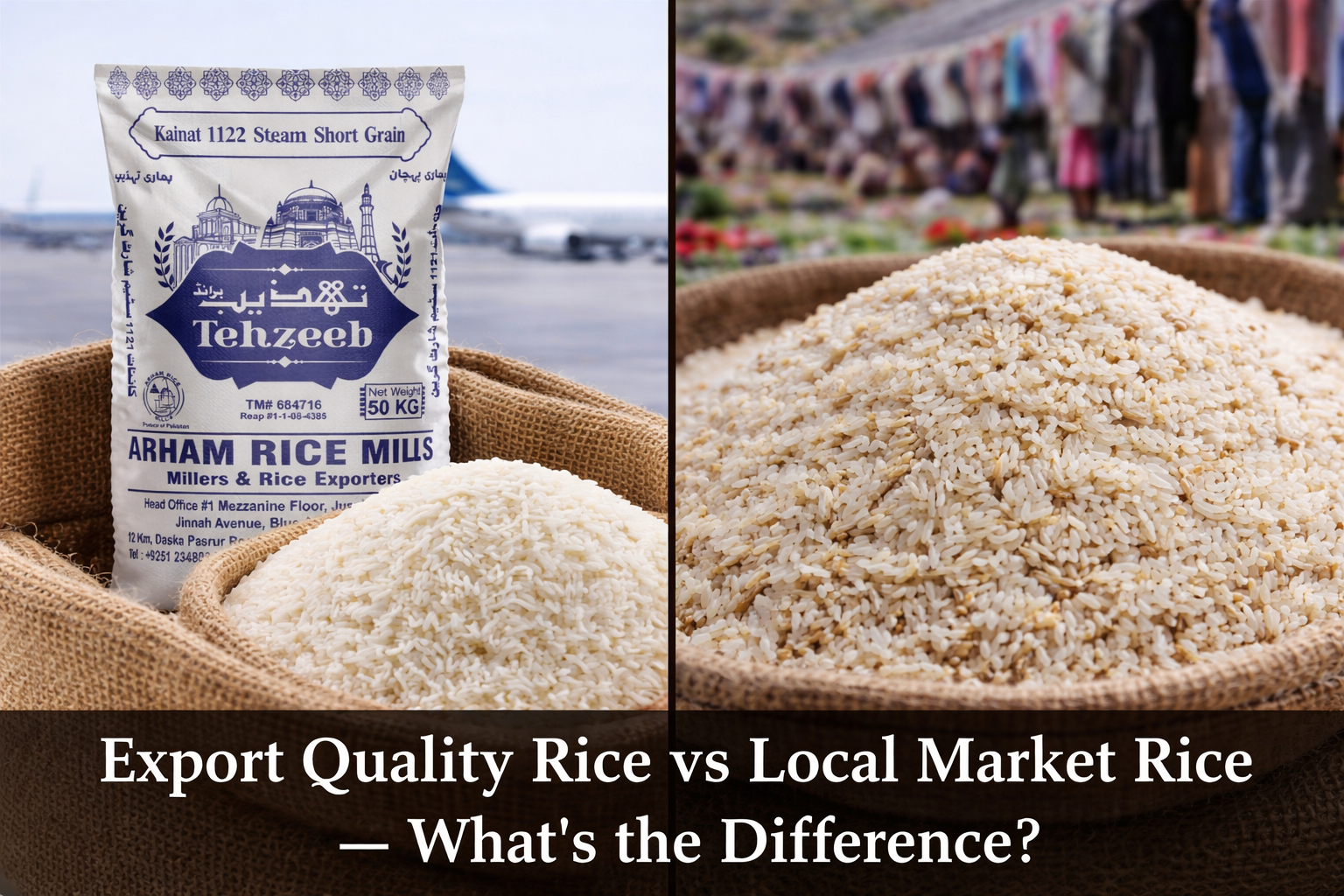
When buying rice, especially in bulk, you may come across terms like export quality rice and local market rice. While both may look similar at first glance, they differ significantly in terms of quality, processing standards, consistency, and pricing. Understanding these differences is essential for importers, businesses, and even local buyers.
What is Export Quality Rice?
Export quality rice is processed and prepared according to international standards. It undergoes strict quality control, advanced grading, and careful packaging to meet the requirements of global markets.
Key features of export quality rice include:
- Uniform grain size and length
- Low percentage of broken grains
- High purity and cleanliness
- Better aroma and aging quality
- Standardized packaging and labeling
At Arham Rice Mill, export quality rice is carefully processed using modern techniques to ensure consistency, hygiene, and premium performance in global markets.
What is Local Market Rice?
Local market rice is typically produced for domestic consumption. While it can still be good in quality, it often does not go through the same level of strict grading and inspection as export-grade rice.
Common characteristics include:
- Mixed grain sizes
- Higher broken percentage
- Less uniform appearance
- Basic packaging
- Lower price compared to export quality rice
Local rice is suitable for everyday use but may not meet the expectations of international buyers or premium food businesses.
Key Differences Between Export Quality and Local Market Rice
- Quality Standards:
Export rice meets international standards; local rice follows basic domestic standards - Grain Consistency:
Export rice is uniform; local rice may vary in size and shape - Processing and Cleaning:
Export rice is thoroughly cleaned and graded; local rice may have minor impurities - Packaging:
Export rice uses high-quality, branded packaging; local rice often uses simple packaging - Price:
Export quality rice is more expensive due to higher standards; local rice is more affordable
Which One Should You Choose?
- Choose export quality rice if you are:
- An importer or exporter
- A restaurant or catering business
- Looking for premium quality and consistency
- Choose local market rice if you:
- Need a budget-friendly option
- Are buying for daily household use
Conclusion
The difference between export quality rice and local market rice lies in standards, consistency, and overall quality. Export-grade rice offers superior performance and reliability, making it ideal for global trade and professional use.
At Arham Rice Mill, we specialize in delivering export-quality basmati rice that meets international expectations, ensuring excellence in every grain.