Blogs
Quality-Controlled Rice vs Unchecked Supply – Arham Rice Mill Guide

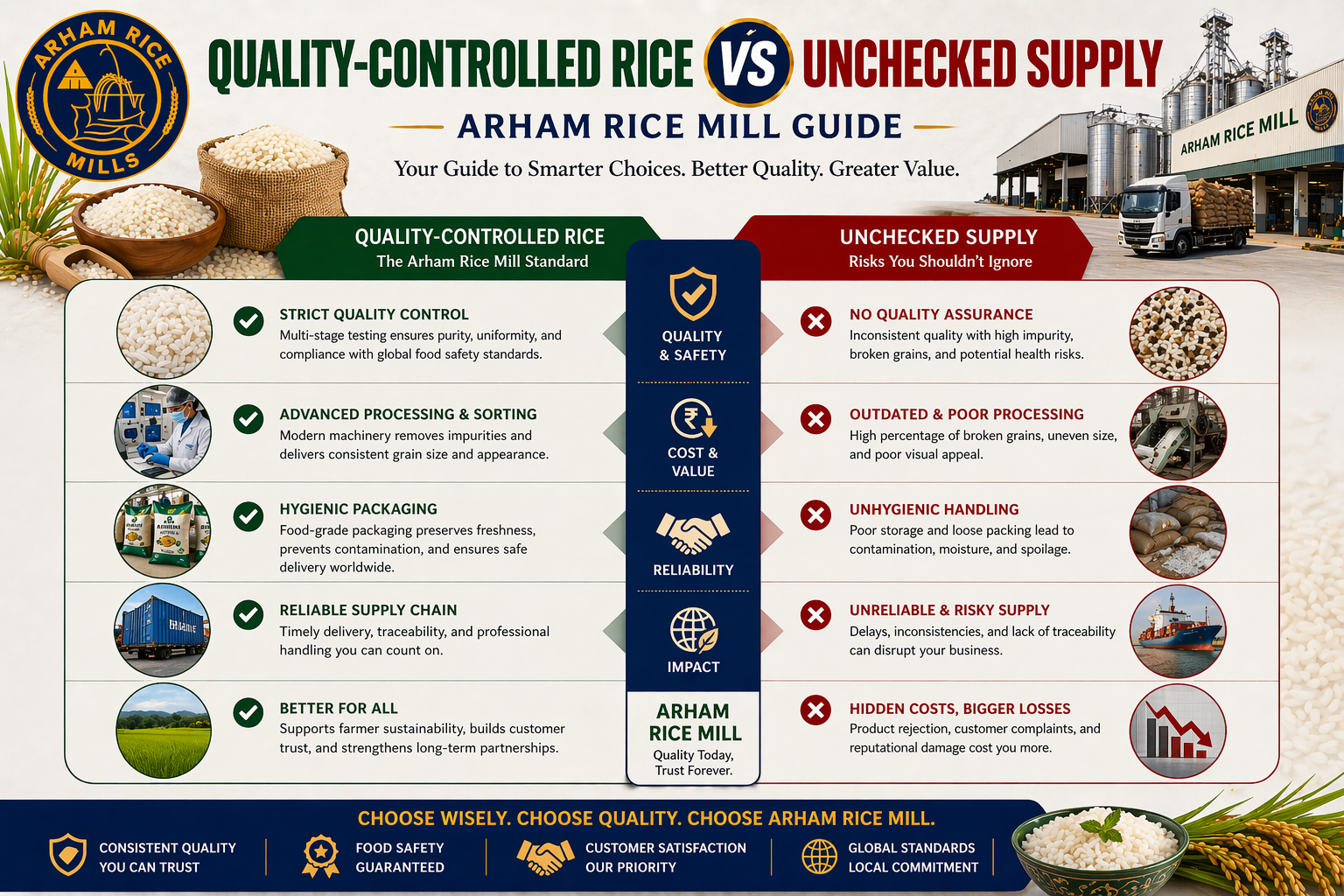
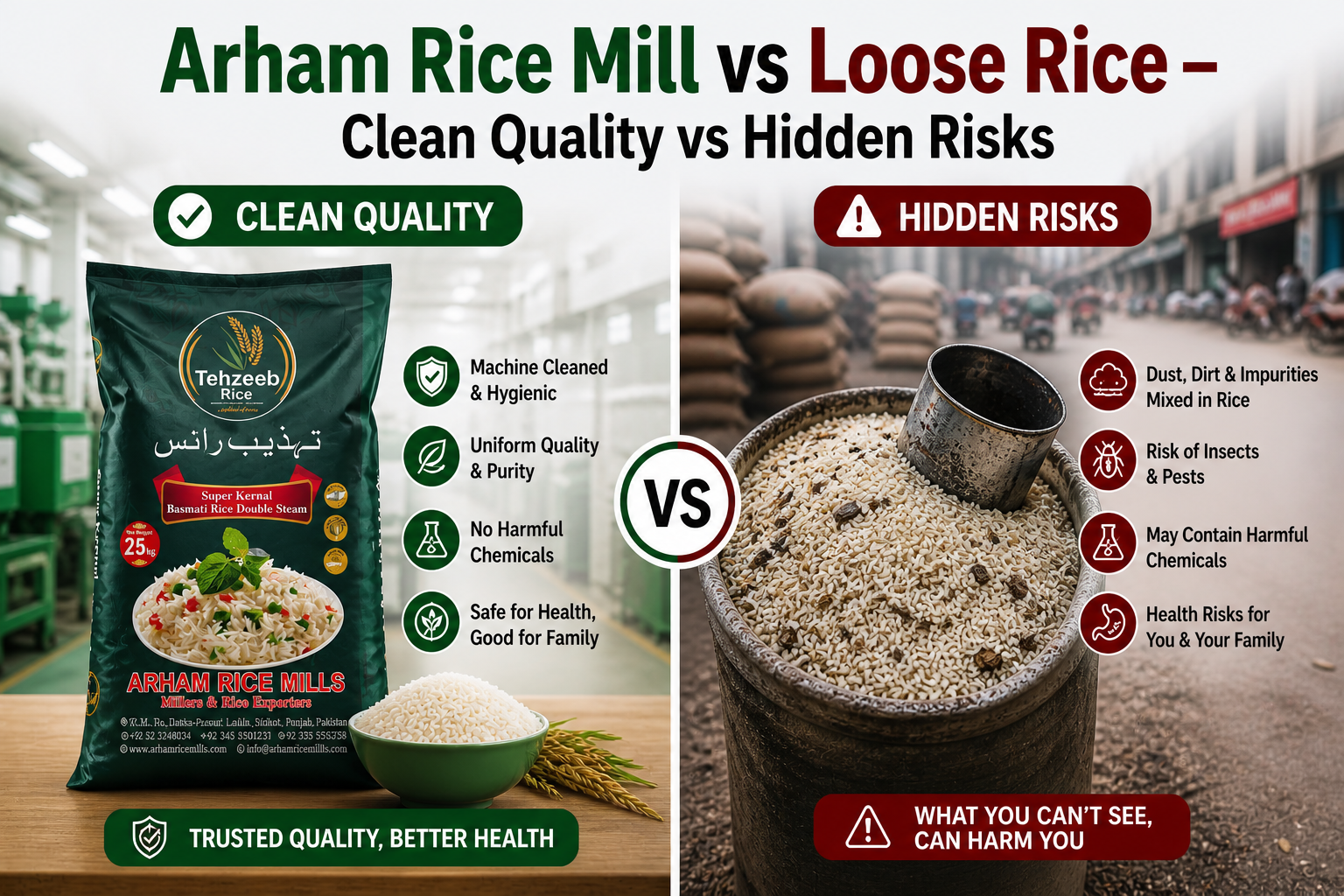
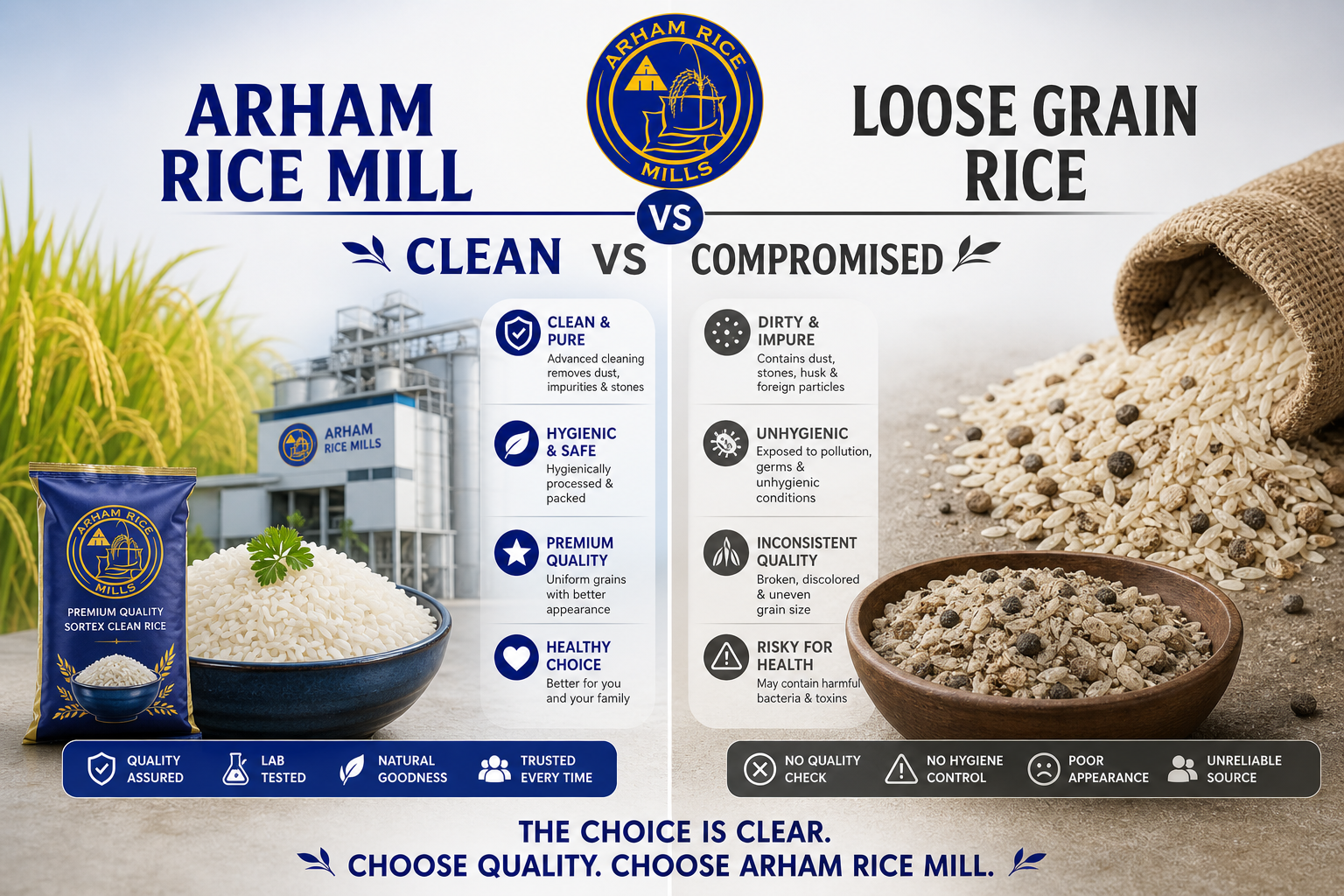
In the global rice market, quality plays a critical role in determining customer satisfaction, food safety, and business success. Buyers today are more conscious than ever about the standards of the rice they purchase. This makes the difference between quality-controlled rice and unchecked supply highly significant. Arham Rice Mill ensures strict quality control at every stage, delivering rice that meets international standards. In this guide, we compare quality-controlled rice with unchecked supply and explain why choosing the right source matters.
🌾 1. Sourcing Standards
Quality-Controlled Rice:
- Sourced from trusted farmers
- Carefully selected paddy
- Consistent raw material quality
Unchecked Supply:
- Random sourcing from multiple sources
- No standard selection process
- Inconsistent grain quality
⚙️ 2. Processing Methods
Quality-Controlled Rice:
- Advanced cleaning and milling systems
- Hygienic processing environment
- Reduced breakage and impurities
Unchecked Supply:
- Outdated or manual processing
- Poor hygiene conditions
- Higher contamination risks
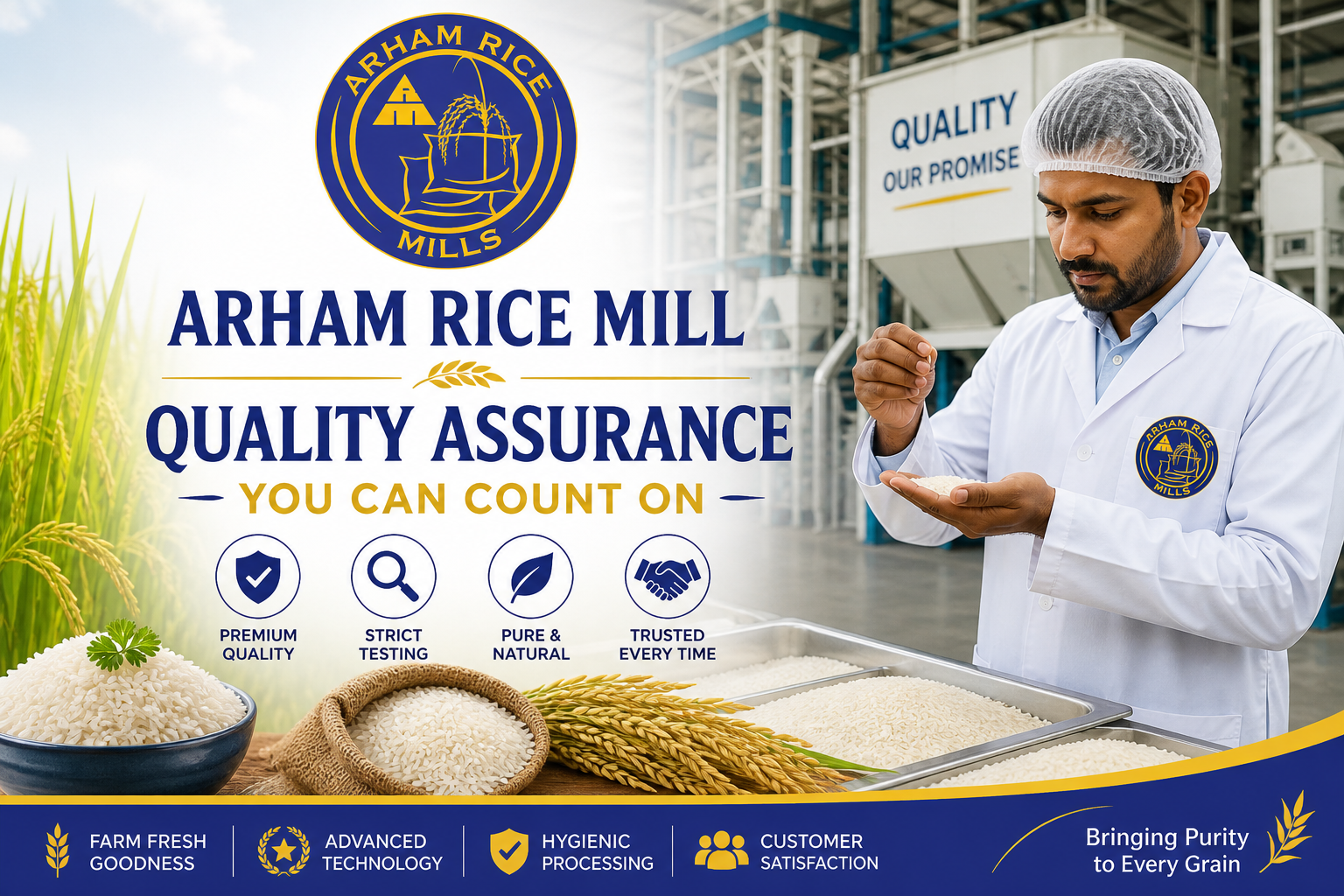
🧪 3. Quality Assurance
Quality-Controlled Rice:
- Regular moisture checks
- Grain uniformity inspection
- Strict impurity removal
Unchecked Supply:
- No systematic quality checks
- Mixed grain sizes and defects
- Possible presence of impurities
📦 4. Packaging and Handling
Quality-Controlled Rice:
- Moisture-proof and durable packaging
- Export-ready standards
- Safe storage and handling
Unchecked Supply:
- Basic or poor packaging
- Risk of damage during transport
- Limited protection from contamination
🚢 5. Supply Reliability
Quality-Controlled Rice:
- Consistent supply chain
- Timely deliveries
- Reliable bulk availability
Unchecked Supply:
- Irregular supply
- Delays and inconsistency
- Uncertain order fulfillment
🌍 6. Compliance with Standards
Quality-Controlled Rice:
- Meets international food safety standards
- Suitable for export markets
- Certified and regulated
Unchecked Supply:
- May not meet global standards
- Risk of rejection in export markets
- Lack of certifications
🎯 Conclusion
Choosing quality-controlled rice over unchecked supply is essential for businesses that value consistency, safety, and long-term success. Arham Rice Mill ensures strict quality control, advanced processing, and reliable supply, making it a trusted choice for global buyers. Investing in quality-controlled rice not only improves product value but also strengthens customer trust.