
Blogs
Aged Basmati vs Fresh Rice – Which Performs Better?

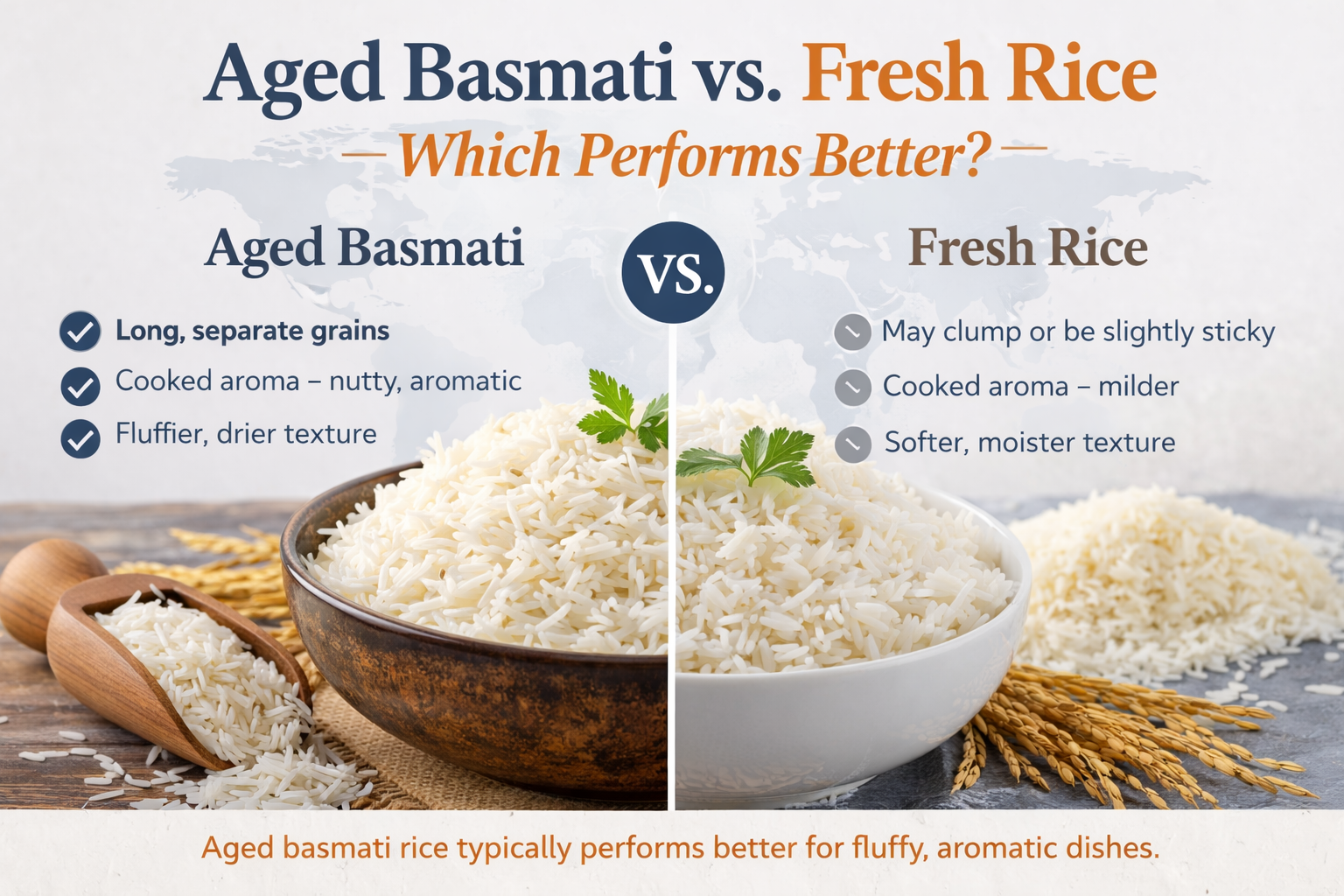
Rice quality plays a crucial role in cooking results, especially when choosing between aged basmati rice and fresh rice. While both have their uses, they differ significantly in texture, aroma, and performance after cooking. Aged basmati rice is known for its superior elongation and fragrance, while fresh rice is often more affordable and commonly used for daily meals. In this blog, we compare aged basmati and fresh rice to understand which one performs better in different cooking and commercial scenarios.
⚖️ 1. Grain Structure and Moisture Content
Aged basmati rice is stored for a specific period to reduce moisture content, which improves its cooking quality.
- Aged Rice: Lower moisture, firmer grains
- Fresh Rice: Higher moisture, softer grains
👉 Lower moisture helps aged rice cook better and remain separate.
🍚 2. Cooking Performance
Performance during cooking is a key difference:
- Aged Basmati: Expands more in length, stays fluffy
- Fresh Rice: May become slightly sticky or clumpy
👉 Aged rice is preferred for dishes requiring perfect grain separation.
👃 3. Aroma and Taste
Aroma is a major factor in rice quality:
- Aged Basmati: Strong, rich fragrance
- Fresh Rice: Mild aroma
👉 Aging enhances both aroma and flavor.
🍽️ 4. Best Use Cases
Each type is suitable for different purposes:
- Aged Basmati: Biryani, pulao, premium dishes
- Fresh Rice: Everyday meals, simple recipes
👉 Choice depends on cooking needs and budget.
💰 5. Price Difference
- Aged Rice: More expensive due to storage and quality
- Fresh Rice: Budget-friendly option
👉 Higher cost reflects better performance.
🌍 6. Demand in Global Markets
- Aged Basmati: High demand in export markets
- Fresh Rice: Mostly used in local consumption
👉 Export buyers prefer aged rice for consistency and quality.
🧪 7. Shelf Life and Storage
- Aged Rice: Longer shelf life and stable quality
- Fresh Rice: Needs proper storage to maintain quality
👉 Aging improves storage stability.
✅ Conclusion
Aged basmati rice clearly performs better in terms of cooking quality, aroma, and presentation, making it ideal for premium dishes and export markets. However, fresh rice remains a practical choice for daily use due to its affordability. The right choice depends on your needs, but for superior results, aged basmati rice is the preferred option.